

Learn
The future

Will
| 'Will' does not change its form. | |
|---|---|
I, you, he, she, it, we, they |
will |
| 'Will' is often shortened to ...'ll. | |
The negative of 'will' is 'will not' - often shortened to won't |
|
I, you, he, she, it, we, they |
will not / won't |


| For example | ||
|---|---|---|
| + | - | |
| I will go. | I'll go. | I won't go |
| You will go. | You'll go. | You won't go |
| He will go. | He'll go. | He won't go |
| She will go. | She'll go. | She won't go |
| It will go. | It'll go. | It won't go |
| We will go. | We'll go. | We won't go |
| They will go. | They'll go. | They won't go |
!Note! 'Will' on its own is not used for things we have arranged or decided to do.
"Will" is usually used in these situations:-
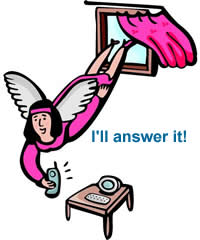
| Volunteering to do something: | (The phone is ringing). I'll answer it. |
|---|---|
Promising to do something: |
(A friend is leaving) I'll visit you in the summer. |
Deciding to do something : |
(Your car won't start) I'll buy a new car. |
Ordering someone to do something: |
(Your child won't do their homework) You'll do your homework now! |
Predicting something will happen |
(Winter is coming) I think it will be a cold winter. |
Sometimes you can use 'will' as a threat.

Don't move or I'll shoot!
!Note! 'Will' is often used with think - "I think I will ..."
Positive (+) |
Negative (-) |
|
|---|---|---|
Statement |
I'll do my homework now. | I won't do my homework later. |
Statement |
I think she'll go to the cinema tonight. | I don't think she'll go to the cinema tomorrow. |
Question (using will) |
Will there be a test on Monday? | Won't there be a test on Monday? |
Question (closed) |
Do you think they'll win? | Do you think they won't win? |
Question (open) |
What do you think he'll do in the summer holidays? |
Shall
| 'Shall' does not change its form. | |
|---|---|
I, you, he, she, it, we, they |
shall. |
| 'Shall' is also shortened to ...'ll. | |
I'll, you'll, he'll, she'll, we'll, they'll - and even (although it's not good English) it'll |
|
The negative of 'shall' is 'shall not' - often shortened to shan't |
|
I, you, he, she, it, we, they |
shall not / shan't |
In British English 'Shall' is often used instead of will in the first person (I/we).
I / We will |
= | I / We shall |
|---|---|---|
I shall be at work on time. |
= | I will be at work on time. |
We shall win the competition. |
= | We will win the competition. |
They shall not pass! |
= |
They shan't pass! |
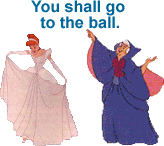
'Shall' is also often used in the first person (I/we) in questions when asking for permission, making suggestions, making an offer or asking for advice.
Shall I do that? |
Shall we go home? |
Listen to it
Your challenge: Where do you think you will, and what will you be doing by this time next year?
!Note - All posts are moderated and then corrected. One correction per person per lesson.
Wouldn't it be cool if there were a teacher available here 24/7? Well, you could help us achieve our dream, and support us in updating and improving these resources by making a donation:-